

The European Central Bank’s plan to redesign euro banknotes has captured public imagination, with over six million people voting on whether Beethoven or a migrating stork should grace future currency. On the surface, this is a design contest. But the euro banknote redesign EUR/USD conversation deserves a closer look from traders, because currency symbolism, identity-building, and institutional messaging often carry indirect signals about how a central bank views its own credibility and cohesion.
This piece uses the ECB’s design competition as a starting point. However, the real value for traders lies in what this reveals about euro-area sentiment, positioning around EUR/USD, and how soft-power narratives interact with hard macro data.

The Hook: A Currency Rebrand With Political Undertones, euro banknote redesign EUR/USD
According to the Guardian, the ECB unveiled ten shortlisted designs last week, split between cultural icons like Maria Curie and Cervantes, and wildlife themes such as storks and kingfishers. Philippe Geoffroy, the ECB’s head of section for new banknotes, said the goal is to move “away from neutrality” and make the currency “feel European.” The new notes won’t circulate until 2030 or 2031, so this is a long-horizon story. Still, the messaging matters: the eurozone is explicitly trying to build stronger public identification with its shared currency, decades after launch.
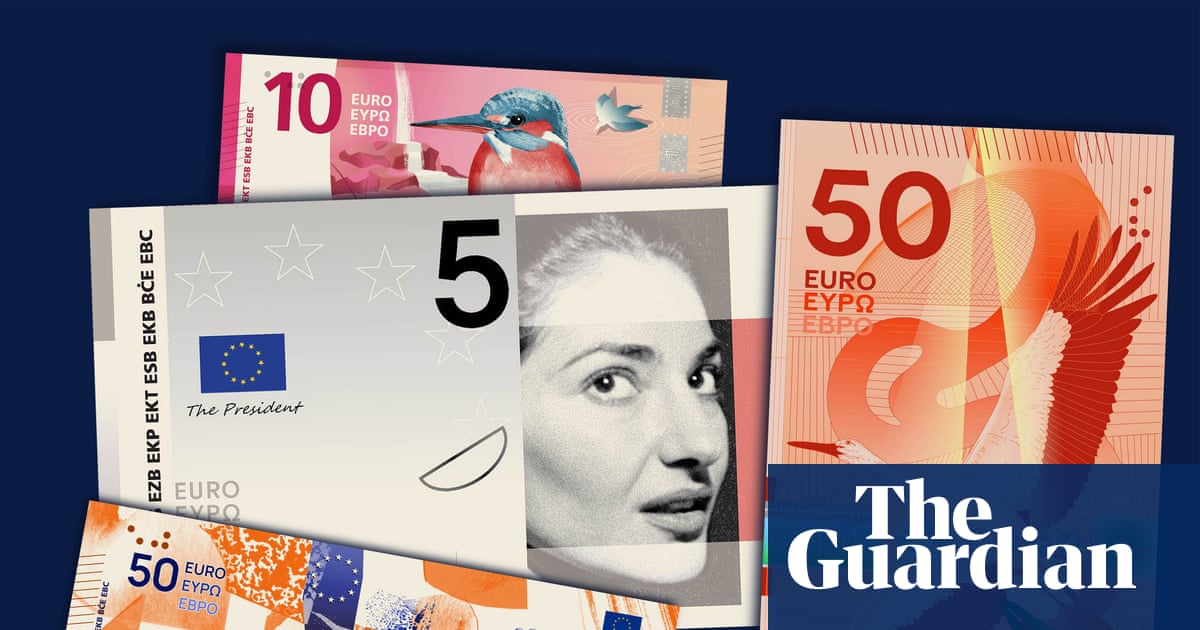
That intent is not trivial for FX markets. Currency legitimacy and public trust underpin long-term demand for a currency as a store of value, even if the mechanism is slow-moving and largely psychological.
Why This Matters for EUR/USD Positioning
Banknote design itself won’t move spot EUR/USD tomorrow. Nevertheless, the euro banknote redesign EUR/USD narrative fits into a broader pattern: European institutions increasingly signaling unity at a time when structural questions about fiscal integration, defense spending, and political fragmentation continue to weigh on the euro’s medium-term trajectory.
Traders should treat this as a sentiment data point rather than a trading trigger. The eurozone has struggled for years with a credibility gap versus the dollar, driven by growth differentials, fragmented fiscal policy, and periodic sovereign debt stress. Symbolic unity campaigns, including this one, are part of a slow effort to counter that narrative. As a result, EUR/USD longs built on “Europe getting its act together” narratives may find modest tailwind support from these soft initiatives, even though they won’t replace rate differentials as the dominant driver.
Who Benefits From a Stronger Euro Identity Narrative
Long-term euro bulls, particularly those positioned via EUR/USD or EUR/GBP, benefit most from any incremental improvement in perceived European cohesion. Exporters within the eurozone who prefer a stable, credible currency also gain, since currency confidence reduces risk premia embedded in cross-border trade contracts. Conversely, dollar bulls who rely on the “safe haven, no alternative” argument may see this as one more incremental threat to their long-term thesis, though not an urgent one.
Sector-wise, European asset managers and pension funds with large domestic-currency liabilities have a quiet interest in anything that reinforces euro credibility, since it supports the case for holding euro-denominated assets rather than diversifying entirely into dollars. Meanwhile, traders using Currency Correlation in Forex Trading: How to Avoid Overexposure frameworks should note that EUR-based crosses often move together during sentiment-driven news cycles, so a soft-power story like this can quietly nudge EUR/GBP and EUR/JPY alongside EUR/USD.
Mechanism: How Soft Narratives Translate Into Flows
The mechanism here is indirect but real. Central banks manage more than interest rates; they manage confidence. A redesigned banknote that emphasizes shared cultural heritage or pan-European wildlife is a low-cost, high-visibility way to reinforce the idea that the euro is a durable, unifying project rather than a fragile compromise between mismatched economies.
Traders monitoring EUR/USD should pair this kind of institutional signaling with harder data: ECB rate decisions, eurozone PMI releases, and fiscal policy updates from major member states. For a more complete macro picture, our EUR/USD Outlook: What Traders Should Watch This Week breaks down the specific data points that typically move the pair week to week. This banknote story, by contrast, belongs in the background category: worth noting, not worth trading in isolation.

Key Risks and Caveats
Several caveats apply. First, the notes won’t enter circulation until at least 2030, so any impact on sentiment is diffuse and slow-building rather than immediate. Second, symbolic gestures can backfire: choosing cultural icons who are seen as exclusionary, or omitting entire regions like the Baltics, could actually reignite intra-EU identity tensions rather than soothe them. Third, currency markets remain dominated by rate differentials, growth expectations, and risk appetite; soft-power stories rarely override these forces even in the medium term.
Additionally, skepticism from northern European member states about further EU-level symbolism could resurface, echoing past debates over fiscal union and shared debt instruments. Traders should therefore avoid overweighting this story in their EUR/USD thesis and instead treat it as one thread among many shaping long-run euro credibility.

Practical Takeaways for Forex Traders
For active traders, the practical application is limited but not zero. Watch for follow-on commentary from ECB officials tying currency design to broader monetary sovereignty themes, particularly around digital euro discussions, which have far more immediate FX relevance. Any acceleration of digital euro rollout plans, paired with this identity-building push, could reinforce a narrative of euro modernization that supports medium-term EUR sentiment.
In the short term, however, rate expectations and eurozone growth data will continue to dominate EUR/USD price action. The banknote redesign is best understood as a slow-burning credibility project, not a catalyst. Traders should keep it filed as context, revisit it as circulation dates approach in 2030, and focus daily execution decisions on the harder economic calendar instead.
Source: The Guardian
</markdown>

I’m Vinit Makol. With 20+ years in forex and financial markets, I serve as lead analyst at Edge-Forex, covering currency markets, macroeconomics, trading strategies, and market-moving events to give traders practical insights they can actually use.