
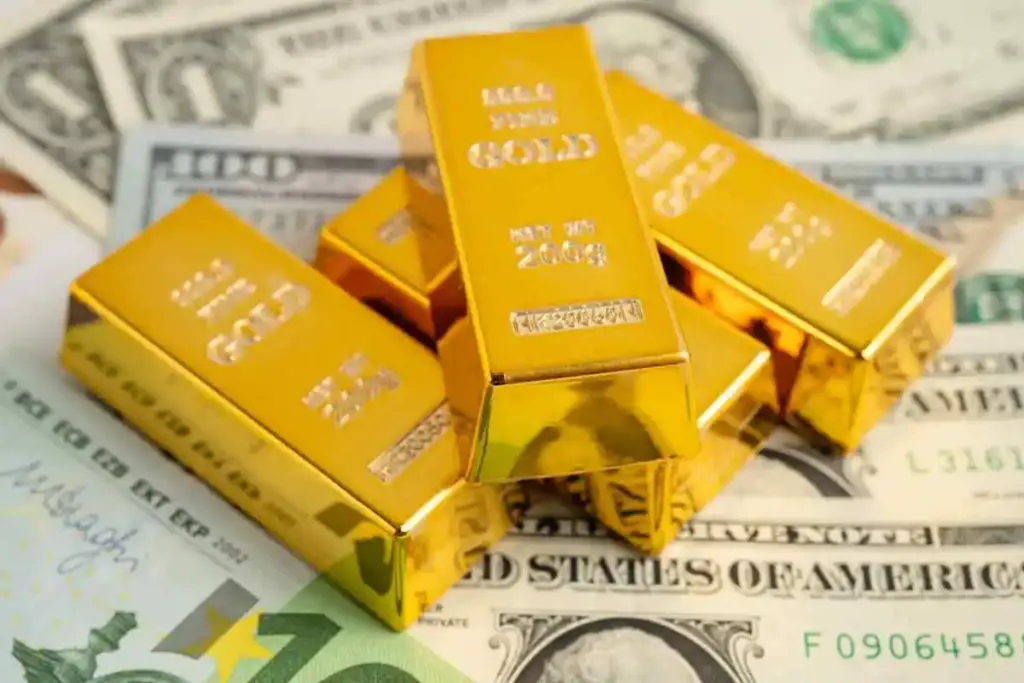
The gold USD relationship plays a central role in global financial markets. Traders, investors, and central banks watch the gold USD relationship closely every day. This relationship explains how gold prices react to changes in the US dollar. It also explains why gold often moves when currency markets shift.
The relationship exists because gold trades globally in US dollars. When the dollar moves, gold pricing reacts immediately. This pricing structure creates a strong gold and US dollar correlation over time. Because of this, understanding how gold prices move against the dollar helps traders read macro signals better.
However, the relationship is not mechanical. It reacts to interest rates, inflation, liquidity, and risk sentiment. At times, the inverse relationship between gold and USD strengthens. At other times, it weakens. Knowing why these shifts happen matters for both trading and investing decisions.
Why Gold Is Priced in US Dollars?
The gold USD relationship starts with pricing mechanics. Gold trades internationally in US dollars. This system was developed after World War II. The dollar became the global reserve currency. Gold pricing followed naturally.
Because of this structure, every gold transaction reflects dollar value. When the dollar strengthens, gold becomes more expensive for non-US buyers. When the dollar weakens, gold becomes cheaper globally. This directly affects demand.
This dynamic creates the inverse relationship between gold and USD in many market phases. A stronger dollar often pressures gold prices lower. A weaker dollar often supports higher gold prices. This pattern strengthens the gold and US dollar correlation across long periods.
Still, pricing alone does not explain everything. Other forces influence how gold prices move against the dollar.
Interest Rates and the Gold USD Relationship
Interest rates strongly influence the relationship. Gold does not pay interest. The dollar does through bonds and cash instruments. Because of this, relative returns matter.
When US interest rates rise, investors earn more holding dollars. This increases the opportunity cost of holding gold. As a result, gold often weakens when rates rise sharply.
When interest rates fall, the opposite happens. Holding dollars becomes less attractive. Gold demand improves. This dynamic reinforces the inverse relationship between gold and USD during rate cycles.
Real interest rates matter more than nominal rates. Real rates subtract inflation from yields. When real rates fall below zero, gold becomes more attractive. In those periods, the impact of US dollar strength on gold prices weakens.
This explains why gold can rise even when nominal rates stay positive.
Inflation Expectations and Dollar Value
Inflation expectations sit at the heart of the gold USD relationship, and it also erodes purchasing power. Gold protects purchasing power over long periods.
When inflation expectations rise, confidence in fiat currencies weakens. The dollar often loses real value. Gold demand increases. This reinforces the inverse relationship between gold and USD again.
However, inflation alone does not drive gold prices. Markets focus on central bank responses. If rate hikes exceed inflation, the dollar may strengthen. In that case, the impact of US dollar strength on gold prices becomes negative again.
This tug-of-war explains why gold sometimes lags inflation headlines. Understanding how gold prices move against the dollar requires watching both inflation and policy signals together.
Risk Sentiment and Safe-Haven Behavior
Risk sentiment changes the gold USD relationship quickly. During calm markets, yield and growth dominate decisions. During stress, safety dominates.
Gold acts as a hedge against systemic risk. The dollar acts as a liquidity anchor. Because of this, both can rise together during severe crises.
This behavior weakens the inverse relationship between gold and USD temporarily. Investors buy dollars for liquidity. They buy gold for protection. This happened during major global shocks.
However, once panic fades, the traditional gold and US dollar correlation usually returns. Gold benefits when liquidity stabilizes. The dollar often pulls back.
This cycle explains why traders should avoid rigid assumptions.
Central Bank Policy and Liquidity
Central banks shape the relationship through liquidity. Expansionary policy increases money supply. Tight policy reduces it.
When central banks cut rates or expand balance sheets, dollar supply rises. This often weakens the dollar. Gold benefits in these conditions. The inverse relationship between gold and USD strengthens again.
When central banks tighten policy, dollar liquidity contracts. The dollar strengthens. Gold faces pressure. This increases the impact of US dollar strength on gold prices.
However, expectations matter more than actions. Markets price policy shifts early. Gold often moves before policy announcements. This is why watching forward guidance matters.
When the Gold USD Relationship Breaks Down?
The gold USD relationship does not always behave cleanly. Several conditions weaken it.
These include:
- Sharp inflation spikes with aggressive tightening
- Supply-driven gold demand
- Heavy central bank gold buying
- Global crises requiring dollar liquidity
In these situations, gold may rise despite a strong dollar. This weakens the gold and US dollar correlation temporarily. It does not destroy it.
Long-term trends usually reassert themselves. Short-term traders must stay flexible.
Understanding how gold prices move against the dollar requires context. Blind correlation trading fails often.
Gold USD Relationship in Trading Decisions
Traders use the relationship as a framework, not a signal. Gold rarely moves for one reason.
Traders usually monitor:
- Dollar index trends
- Real yield movements
- Inflation expectations
- Central bank communication
- Risk sentiment shifts
When multiple factors align, gold trends strengthen. When signals conflict, gold chops sideways.
The inverse relationship between gold and USD works best during clear macro cycles. It works poorly during transitions.
This is why disciplined traders wait for confirmation.
Long-Term Investing and Portfolio Allocation
For investors, the gold USD relationship serves a different purpose. Gold protects purchasing power over decades. The dollar fluctuates in cycles.
Long-term investors care less about short-term correlation. They focus on structural risks.
These include:
- Persistent inflation
- Rising sovereign debt
- Currency debasement
- Geopolitical instability
In these environments, the impact of US dollar strength on gold prices becomes temporary. Gold often regains strength over time.
This explains gold’s role as a strategic hedge.
Why the Gold USD Relationship Still Matters?
The gold USD relationship remains relevant because it reflects trust. It reflects confidence in money, policy, and stability.
Gold does not react to headlines alone. It reacts to credibility. The dollar reflects confidence in US policy. Gold reflects confidence in fiat systems overall.
When trust shifts, prices move.
Understanding the relationship helps traders avoid emotional decisions. It helps investors manage risk better. It also explains why gold behaves differently across cycles.
This relationship will continue to shape markets because money remains central to economic systems.
Key Takeaways for Traders and Investors
This relationship operates through multiple channels. It reflects pricing mechanics, rates, inflation, liquidity, and sentiment.
Important points to remember:
- Gold trades in US dollars globally
- Interest rates influence opportunity cost
- Inflation shapes real value perception
- Crises can push gold and the dollar together
- Long-term trends override short-term noise
The inverse relationship between gold and USD remains powerful, but not absolute. The gold and US dollar correlation changes with context. The impact of US dollar strength on gold prices depends on real yields and credibility.
Learning how gold prices move against the dollar improves decision-making. It replaces myths with structure.
In the end, the gold USD relationship is not a rule. It is a signal. Knowing how to read it separates reactive traders from prepared ones.
Click here to read our latest article USD/INR Today: Why Is the Rupee Under Pressure?

I’m Kashish Murarka, and I write to make sense of the markets, from forex and precious metals to the macro shifts that drive them. Here, I break down complex movements into clear, focused insights that help readers stay ahead, not just informed.