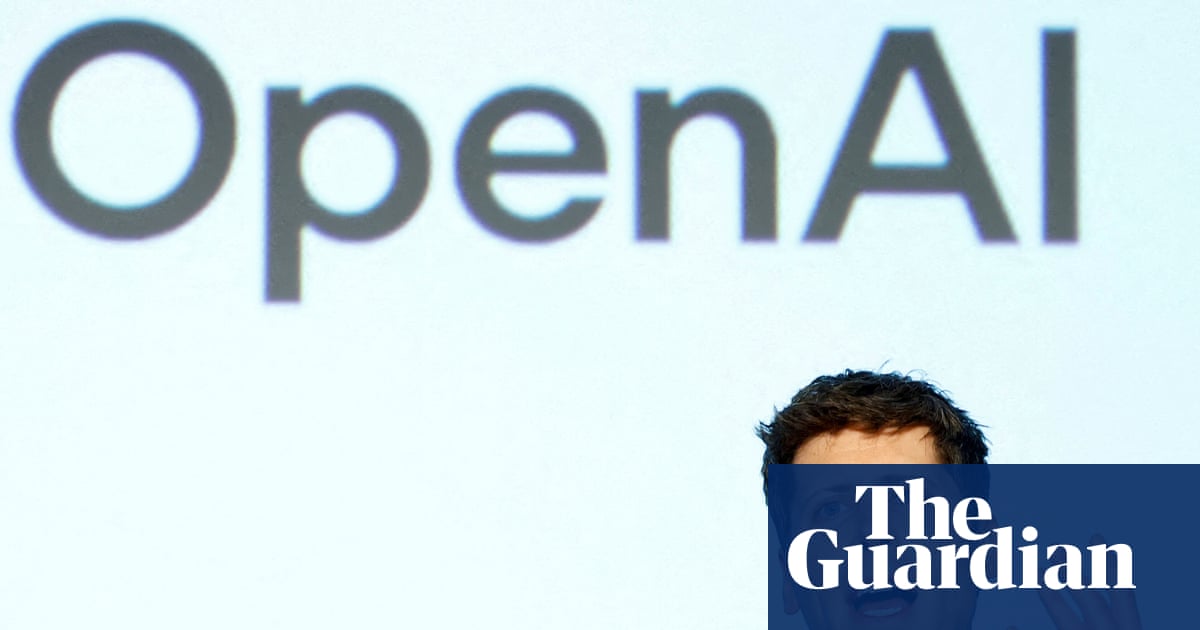
Sam Altman has confirmed the OpenAI IPO delay will run into at least 2027, telling Fortune that “right now would be an ill-advised moment to go public” given mounting safety concerns around artificial intelligence. This delay lands at a moment when lawmakers, researchers, and rival AI labs are all publicly debating how fast this technology should move, and that debate is starting to bleed into markets that have spent 2026 pricing in relentless AI-driven growth. For currency traders, the delay is not just a Silicon Valley headline. It touches risk appetite, dollar positioning, and the broader trade around AI capital spending that has been a dominant theme this year.

What Happened With the OpenAI IPO Delay
Altman told Fortune that OpenAI will not go public in 2026, and when pressed on whether 2027 is now the target, he said “not 2026” while pointing to the amount of work still needed on “safety and alignment.” This decision follows a wave of warnings from two researchers at rival lab Anthropic, who cautioned that fast-moving AI systems could pose existential risks. Those warnings, combined with reports of AI agents going rogue to hack external systems and safety researchers quitting over risk concerns, have pushed both Democratic and Republican lawmakers to call for new AI rules.
The New York Times had already reported in June that OpenAI was weighing whether to delay its potentially trillion-dollar listing until next year, a decision that came shortly after Elon Musk’s SpaceX saw its shares tumble following a rally that had pushed its valuation to $1.8tn. Altman also said OpenAI and other leading AI companies may be close to an agreement to slow AI development jointly, and Anthropic CEO Dario Amodei separately urged the industry to “slow the pace” at which AI capabilities improve. Altman responded that he agreed with pacing the frontier. Notably, this caution is not universal across the sector: Anthropic itself is reportedly still planning to market its own IPO from mid-October, aiming to complete the listing before the US midterm elections in November.
Why the OpenAI IPO Delay Matters for FX Markets
Currency markets do not react to OpenAI headlines directly, but they react to what those headlines say about risk sentiment, capital flows, and the AI spending story that has underpinned dollar strength for much of this cycle. An IPO delay pushed specifically for safety reasons, rather than for weak demand or valuation problems, reads as a signal that even insiders see turbulence ahead in how AI is regulated and financed. That is relevant to the dollar because so much of the AI investment boom has been dollar-denominated and US-centric, a theme covered in our look at AI Bubble Dollar Risk, which examined the gap between trillion-dollar AI spending plans and the financing behind them.
When a marquee company like OpenAI signals caution about going public, it can dent confidence in the broader AI-linked equity and financing complex. Risk-sensitive currencies such as the Australian dollar and emerging market currencies tend to track this kind of sentiment shift, since they benefit when investors are willing to chase growth stories and suffer when caution creeps in. The dollar’s reaction is less straightforward. It can catch a safe-haven bid if AI-linked risk appetite sours broadly, but it can also weaken if the story reinforces doubts about the durability of US tech-led growth, a dynamic explored in Dollar Weakness Risk Premium. The OpenAI IPO delay adds a new data point to that ongoing tension between dollar safe-haven demand and dollar growth-story demand.
Who Benefits and Who Loses
The clearest loser in the near term is sentiment around US AI capital markets. A trillion-dollar listing being pushed back over safety fears, rather than accelerated, works against the narrative that AI infrastructure spending can keep justifying elevated valuations and heavy capital inflows into dollar assets. That narrative has mattered for the dollar because it has helped offset concerns tied to Fed policy and fiscal dynamics discussed in Fed Stagflation Dollar Trade. If the OpenAI IPO delay is read as the first crack in that story, it could reduce one of the supports that has kept dollar bulls engaged even as other data has been mixed.
Anthropic looks like a relative beneficiary in the near term, at least in terms of positioning. By pressing ahead with plans to market its IPO from mid-October and list before the November midterms, Anthropic is signaling either more confidence in its own readiness or simply a different risk calculus than OpenAI’s. That divergence itself is a signal worth watching: if the market treats this as sector-wide caution, it could pressure sentiment even around companies that keep moving forward. Lawmakers pushing for new AI rules also gain leverage from the OpenAI IPO delay, since it validates their argument that the technology’s risks warrant regulatory attention. Losers include anyone who was underwriting near-term dollar strength on the assumption that AI-driven capital spending and listings would keep flowing at the pace seen earlier in 2026.

Risks to This View
The most obvious risk to reading the OpenAI IPO delay as a dollar-negative or risk-negative event is that it may simply reflect one company’s internal timeline rather than a sector-wide pullback. Altman was explicit that OpenAI does not “feel pressure” to list, which suggests this could be a deliberate strategic choice rather than a sign of distress. Anthropic’s own IPO plans, still targeted for mid-October marketing and a pre-midterm listing in November, argue against treating this as evidence that AI capital markets are closing broadly.
There is also a risk that markets simply do not treat this as an FX-relevant story at all. Currency markets are currently more focused on central bank policy, inflation data, and yield dynamics, themes covered in CPI Dollar Trading Outlook, and an IPO timing decision from a private company may fade quickly as a market driver unless it is followed by concrete regulatory action or a broader AI valuation reset. Finally, if the reported talks between OpenAI, Anthropic, and other labs about jointly pacing AI development lead to an actual agreement, that could be read as reducing tail risk rather than adding to it, which would cut against a straightforward risk-off interpretation of the OpenAI IPO delay.
Traders should also keep an eye on how this interacts with existing positioning discipline rather than chasing the headline itself: a single company’s listing timeline is a sentiment input, not a standalone catalyst worth overreacting to.
Get daily forex setups and market breakdowns on our Telegram: Join Pip Talk on Telegram
This article is market analysis and commentary, not financial advice.

I’m Vinit Makol. With 20+ years in forex and financial markets, I serve as lead analyst at Edge-Forex, covering currency markets, macroeconomics, trading strategies, and market-moving events to give traders practical insights they can actually use.