

USD/JPY intervention risk has jumped back onto every trading desk’s radar this week. Reuters reported that the US Treasury quietly warned banks, via the New York Fed, to “stand ready for future action” in the yen market. That notice landed a day after Japanese authorities had already stepped in to pull dollar/yen off its four-decade low near 163.65, sending the pair sharply lower to around 159.09. This is not just a Tokyo story anymore — Washington appears willing to lend a hand, and that changes the calculus for anyone holding yen exposure.
That headline is the spark. What matters more for traders is what a coordinated US-Japan intervention effort actually means for positioning across the major pairs, and how long the effect might last.

Why USD/JPY Intervention Risk Changes the Trade
Verbal intervention alone rarely moves markets for long. But when the Treasury signals operational readiness — rate checks, swap-line activation, coordinated timing with the Bank of Japan — it introduces genuine two-way risk into a trade that had become dangerously one-directional. For months, the yen’s slide was driven by the widening rate differential between the Federal Reserve and the Bank of Japan. Carry trades funded in yen and deployed into dollars, euros, and even emerging-market assets became crowded and profitable.
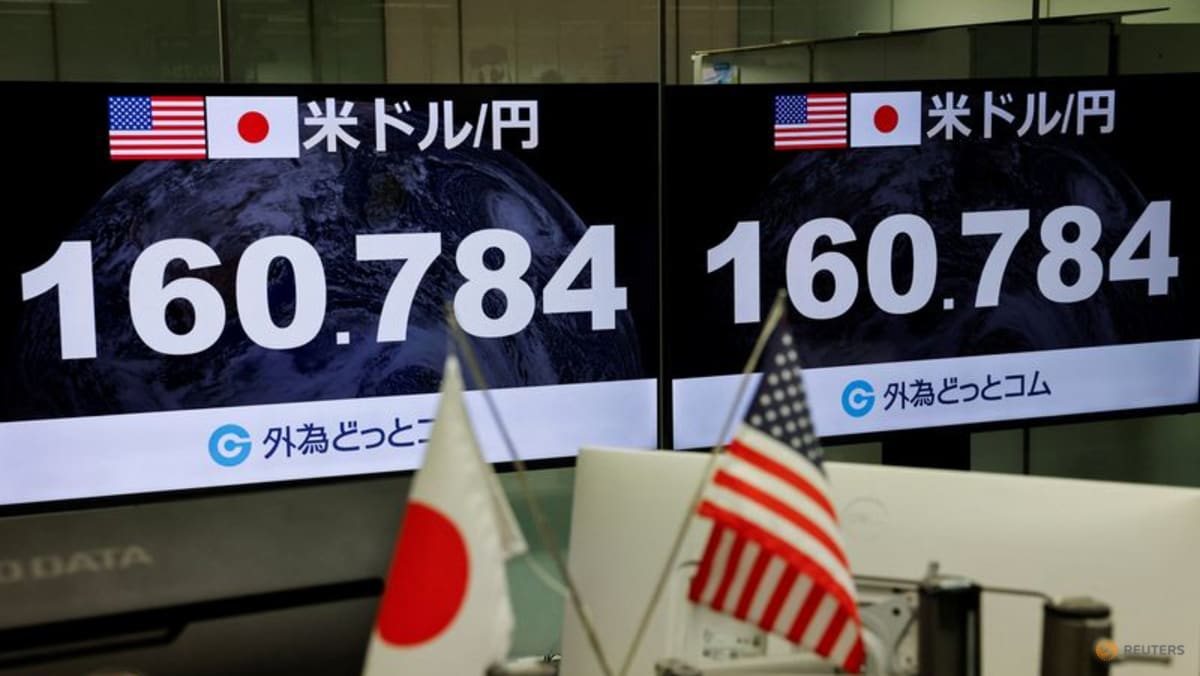
USD/JPY intervention risk flips that setup. Once traders believe officials will defend a level, they must price in sudden, sharp reversals rather than smooth continuation. That asymmetry forces carry traders to trim size or hedge, even if they still believe in the underlying rate story. As a result, implied volatility on yen pairs has jumped, and options desks are quoting fatter skew for downside dollar moves.
The Mechanical Transmission
Intervention typically works through direct selling of dollars for yen, but the psychological channel is often stronger. Simply announcing “stand ready” language forces speculative shorts to second-guess entry points near round numbers. Therefore, expect choppier price action around 160.00 and 158.00 in USD/JPY over the coming sessions, with sharp air pockets on any confirmation of actual intervention.
Which Pairs Are Affected, and In Which Direction
USD/JPY is the obvious epicenter, and the immediate direction is lower dollar, stronger yen, at least tactically. However, the ripple effects extend well beyond that single pair.
- EUR/JPY and GBP/JPY: These crosses often move even more violently than USD/JPY during intervention episodes because they combine yen strength with independent euro and sterling dynamics. Expect outsized downside moves here if Tokyo and Washington act together.
- AUD/JPY and NZD/JPY: These are classic carry-trade proxies. A yen squeeze tends to trigger rapid unwinds in these pairs, since traders often fund AUD and NZD longs with yen borrowing.
- USD/CHF and EUR/USD: Broader dollar sentiment can soften slightly if markets interpret Treasury action as a signal that Washington is comfortable with a weaker dollar narrative more generally, though this spillover is usually modest and short-lived.
Traders managing multiple yen crosses simultaneously should be especially careful about overlapping exposure. A single yen-driven shock can hit several positions at once, which is exactly the kind of hidden correlation risk covered in this guide on currency correlation in forex trading.
Who Benefits From This Move
Several groups stand to gain from renewed USD/JPY intervention risk. Short-term momentum traders who caught the reversal from 163.65 to 159.09 already booked substantial gains. Meanwhile, Japanese exporters and importers with dollar liabilities get some breathing room as the currency stabilizes, reducing imported inflation pressure that has squeezed Japanese households.
On the macro side, the Bank of Japan benefits politically. A stronger yen, engineered partly with US cooperation, gives Governor Ueda more room to normalize policy gradually without triggering a disorderly currency collapse. The Takaichi government also benefits, since currency stability supports its broader economic narrative heading into international meetings like the G20 gathering in Asheville.
Conversely, aggressive dollar-yen carry traders and leveraged funds caught offside face painful drawdowns. Hedge funds running large short-yen books built on the assumption of continued Fed-BoJ divergence are the most exposed to further squeezes.

Key Caveats and Risks to This View
Nothing here is guaranteed. Several risks could undercut the bullish yen thesis quickly.
First, verbal and preparatory signals do not always translate into sustained action. If actual intervention proves limited or absent, dollar-yen could resume its climb once market attention fades. Second, the underlying rate differential between the Fed and BoJ has not disappeared. Unless the Fed shifts its own policy stance, the fundamental pull toward dollar strength persists, and any yen rally could be sold into by long-term investors.
Third, coordinated intervention historically works best when paired with genuine policy convergence, not just statements. Traders should watch upcoming Fed commentary closely, since any hint of prolonged rate holds could reignite the very carry trade that intervention is trying to suppress. This is exactly the kind of scenario where preparing systematically around a policy decision matters, as outlined in this breakdown of FOMC meeting positioning for dollar volatility.
Finally, position sizing becomes critical in this environment. Intervention-driven volatility can produce sudden 200-300 pip swings that blow through poorly calibrated stop losses. Traders should reassess exposure limits before adding new yen positions given the elevated USD/JPY intervention risk currently priced into options markets.

Bottom Line
USD/JPY intervention risk has shifted from theoretical to tangible. The coordinated signaling between Tokyo and Washington suggests officials view current levels as unsustainable, and traders should respect that until proven otherwise. However, the underlying macro drivers of yen weakness remain intact, meaning this could be a tactical reversal rather than a structural trend change. Staying nimble, watching official rhetoric, and managing cross-pair correlation will separate the traders who profit from this episode from those who get caught in the squeeze.
Source: CNA
</markdown>

I’m Vinit Makol. With 20+ years in forex and financial markets, I serve as lead analyst at Edge-Forex, covering currency markets, macroeconomics, trading strategies, and market-moving events to give traders practical insights they can actually use.