

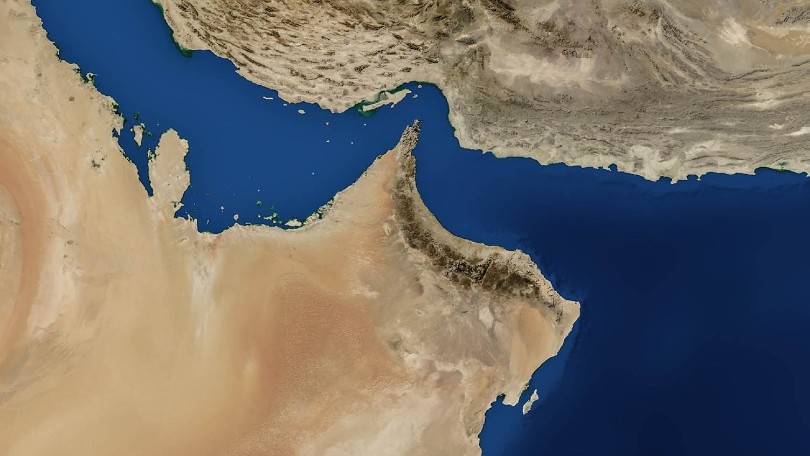
Brent crude sits near $85 a barrel as headlines suggest Iran and Oman are inching toward a deal over the Strait of Hormuz. Yet UBS’s supply chain stress index tells a different story: pressures have eased only modestly from June’s peak and remain nearly a full standard deviation above pre-conflict levels. This gap between headline optimism and underlying stress is exactly where Hormuz supply chain FX dynamics become interesting for traders. The oil market may be pricing relief, but shipping costs, delivery delays, and inventory drawdowns are still working through the global economy — and currencies are far from finished repricing that reality.

Why Hormuz Supply Chain FX Matters Beyond Oil Prices
Most traders watch Hormuz headlines purely through the crude lens. However, the real FX story runs through freight costs, inflation expectations, and current account balances of oil-importing nations. When shipping costs rise even as spot oil eases, as UBS’s data shows happening right now, it signals that the transmission mechanism into consumer prices is still live. That matters because central banks set policy on forward inflation expectations, not just spot commodity prices.
Therefore, currency pairs tied to energy-import-heavy economies remain vulnerable to a second wave of pressure, even if Brent itself stabilizes or drifts lower. This is the crux of the current Hormuz supply chain FX setup: markets have priced the oil shock but not fully priced the freight and inventory shock that follows with a lag.
Which Pairs Are Most Exposed
JPY and INR: The Import-Heavy Laggards
Japan and India import the overwhelming majority of their oil, and both economies are exceptionally sensitive to freight-driven inflation. USD/JPY and USD/INR tend to weaken their base currencies when energy costs stay elevated for longer than spot crude suggests, since trade deficits widen and terms-of-trade deteriorate. India’s own data confirms it remains 90% import-dependent for crude, meaning any lag between Brent normalization and actual landed costs disproportionately hurts the rupee.
EUR: Squeezed From Two Sides
The euro faces a double bind. Europe’s gas storage is already at its lowest level since 2011, and elevated shipping costs compound the energy cost burden heading into winter. As a result, EUR/USD carries a persistent downside risk premium tied to energy security, independent of ECB policy decisions. This overlaps with themes explored in our analysis of Brent oil forecast FX, where even a downward revision to long-term Brent estimates didn’t eliminate near-term European vulnerability.
Commodity and Gulf-Linked Currencies
Conversely, currencies tied to oil-exporting economies — the Norwegian krone, Canadian dollar, and Gulf-pegged units — benefit when Brent holds near $85 rather than collapsing. UAE’s aggressive tanker fleet expansion and continued export flow through alternative routes suggest exporters are adapting faster than importers can hedge. This asymmetry favors petro-currencies on a relative basis even amid disruption.
The Mechanism: Why Freight Costs Lead Inflation, Not Oil Prices
Here’s the key mechanism traders often miss. Oil futures are forward-looking and react quickly to deal headlines. Freight costs, however, reflect actual physical constraints — vessel availability, insurance premiums, and rerouting around the chokepoint. UBS’s index shows shipping costs “ratcheted up again” across Baltic, Harper Petersen, Drewry, and Freightos benchmarks even as oil eased. That divergence means the inflationary impulse into consumer economies is still building, not fading.
Consequently, central banks in import-dependent economies face a lag between headline oil relief and real economic relief. This lag creates a window where rate-cut expectations may get priced in prematurely, only for sticky freight-driven inflation to force a reversal. Traders positioned for early dovish pivots in JPY or EUR pairs should treat this as a genuine risk to that thesis, not a footnote.

Who Benefits From This Positioning
Macro funds running long-USD, short-import-currency baskets benefit most directly, since the dollar remains the funding and safe-haven currency during prolonged Gulf uncertainty. Similarly, carry traders in petro-currencies gain as long as Brent holds above the low-$80s support zone rather than falling sharply. Meanwhile, options traders selling volatility on EUR/USD may be underpricing the winter energy risk given how thin European gas storage remains.
This dynamic connects closely with broader themes we’ve covered around Hormuz tanker strikes FX, where escalation risk alone — independent of an actual closure — was enough to move risk premiums across G10 and EM pairs.
Key Risks and Caveats
No thesis here is bulletproof. If the Iran-Oman deal finalizes cleanly and shipping traffic normalizes faster than UBS’s index suggests, the freight-cost lag could close quickly, undercutting the import-currency weakness argument. Additionally, geopolitical headlines around Hormuz have proven volatile and prone to sudden reversal — a single tanker incident or diplomatic breakthrough can swing sentiment within hours.
Position sizing matters enormously in this environment given the headline sensitivity. Traders should use a proper position-sizing calculator approach — wait, that link belongs elsewhere; the point stands that volatility this headline-driven demands disciplined risk management rather than conviction-sized bets.
Finally, correlation breakdowns are common in chokepoint-driven markets. Oil, freight, and currency relationships that hold during acute crisis phases can decouple once markets shift attention elsewhere, so traders should reassess this thesis weekly rather than treat it as a static, months-long trade.

Conclusion
The Hormuz supply chain FX story isn’t about whether Brent hits $85 or $90 next week. It’s about the slower-moving freight and inventory stress that UBS’s index captures — stress that remains well above pre-conflict norms even as headlines turn optimistic. Import-heavy currencies like the yen, rupee, and euro carry asymmetric downside risk from this lag, while petro-currencies and the dollar retain relative support. Traders who track freight indices alongside oil futures will likely spot the next leg of this move before it hits mainstream FX headlines.
Source: OilPrice
</markdown>

I’m Vinit Makol. With 20+ years in forex and financial markets, I serve as lead analyst at Edge-Forex, covering currency markets, macroeconomics, trading strategies, and market-moving events to give traders practical insights they can actually use.