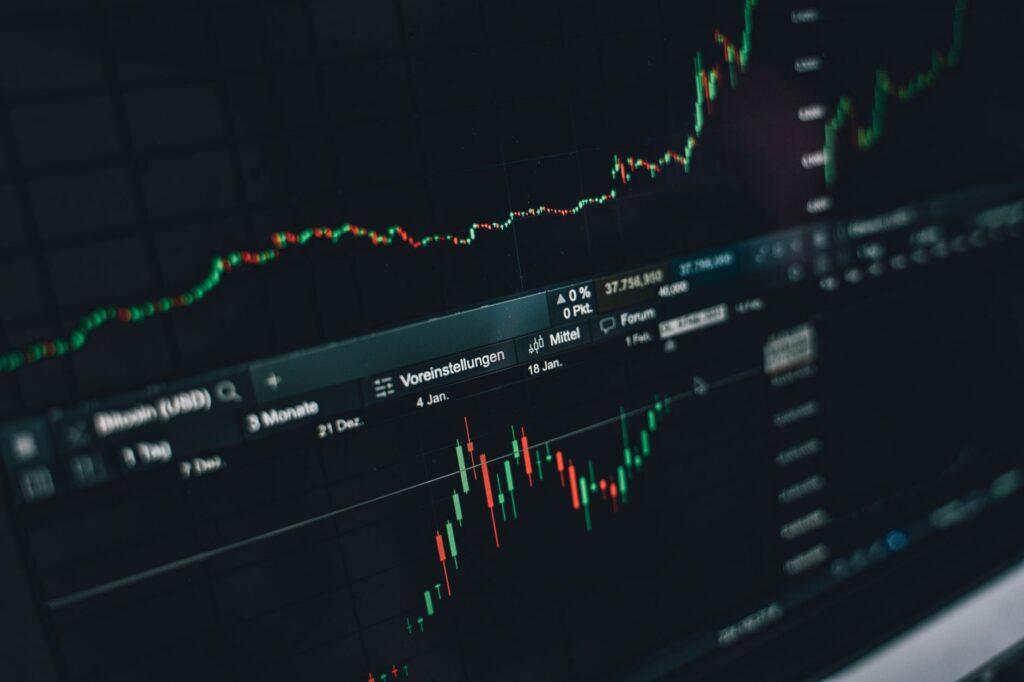
A sharp tech selloff safe havens move gripped global markets on Monday after the bosses of Anthropic, OpenAI and SpaceX warned that “reckless” AI development could soon spiral out of control. Nvidia fell 3.3% by the New York close, AMD dropped 4%, and Micron Technology and Sandisk both slumped 5%, dragging the tech-heavy Nasdaq index fund down 0.5% on the day. The selloff jumped continents fast: SoftBank shares slumped 13% in Tokyo, South Korea’s Kospi fell 3%, Taiwan Semiconductor Manufacturing Company dropped 1.2%, and in Europe, ASML slid 6%. For currency traders, this is not just a chip-stock story. It is a risk-sentiment shock that runs straight through the funding currencies, safe havens, and export-linked pairs that sit underneath the AI trade.

What Triggered the Tech Selloff Safe Havens Move
Anthropic CEO Dario Amodei set off the rout over the weekend by appealing for the AI industry to “slow down,” arguing that building too fast is reckless and warning that a swarm of AI agents could eventually cause hundreds of billions of dollars in damage. OpenAI’s Sam Altman, Google DeepMind’s Demis Hassabis, and SpaceX’s Elon Musk all publicly backed Amodei’s essay, titled “We Must Pace the Frontier.” Anthropic co-founder Jack Clark went further, telling the BBC that a third-party “kill switch” may be needed to prevent catastrophe. Donald Trump dismissed the concern outright, calling it a “sick conspiracy” and telling an AI conference audience by speakerphone that “the robots are not going to be taking over the world.” That split between industry leaders sounding the alarm and the White House waving it off is itself a source of policy uncertainty, and markets tend to price uncertainty through currency volatility before anything else.
Which Currency Pairs Move and Why
The mechanism here is familiar from any sharp equity drawdown: when risk assets sell off, capital rotates toward funding and safe-haven currencies. The Japanese yen and Swiss franc are the classic beneficiaries, since both tend to strengthen when investors unwind leveraged, risk-on positions built on cheap borrowing. SoftBank’s 13% slump is especially notable for yen watchers, given the company’s outsized bet on OpenAI, meaning Japanese equity weakness and yen demand can move together during an AI-linked drawdown. The Kospi’s 3% fall matters for the Korean won, since the index leans heavily on chipmakers supplying AI companies. Commodity and growth-sensitive currencies such as the Australian and New Zealand dollars typically underperform in these episodes too, as they are priced off global risk appetite and China-linked demand. On the dollar side, the picture is more mixed than a simple risk-off rally, a theme we explored in Dollar Weakness Risk Premium: US tech weakness can pull the dollar down against havens even as it holds against growth-sensitive currencies.

Who Benefits and Who Loses in FX Terms
The direct losers are currencies and economies most tied to the AI infrastructure buildout. Taiwan and South Korea, both chip-supply hubs, saw their major indices fall alongside AI-linked stocks, and sustained weakness in TSMC or Kospi-linked sentiment can weigh on the Taiwan dollar and Korean won given how central semiconductor exports are to both economies. The euro faces its own pressure point through ASML, Europe’s biggest company by value, which slumped 6%; a sustained AI slowdown would hit a key eurozone growth driver. On the winning side, sectors seen as AI disruption targets rallied on the read-through that a slower AI rollout reduces displacement risk, with WPP and Relx both up 5% in London. That is a UK equity story more than an FX one, but it illustrates how unevenly this shock is landing: not every corner of the market is repricing the same risk in the same direction. We covered a related angle on how AI spending itself pressures the dollar in AI Bubble Dollar Risk, which is worth reading alongside this move since the two forces, slowdown fears and bubble fears, can push FX in similar directions even though they stem from different concerns.

The Dollar’s Awkward Position
The dollar’s response to this story is genuinely two-sided. A broad tech selloff safe havens rotation should, in isolation, pull the dollar lower against the yen and franc as US risk assets underperform. But the dollar also remains the world’s default safe asset in a global panic, and Trump’s public dismissal of AI risk, paired with his framing of the debate as a competitiveness race against China (“WHOEVER WINS AI, WINS!”), signals that Washington has no near-term appetite for regulation that would slow the sector down. That reduces the odds of a policy-driven capital flight out of dollar assets, even as equity-driven flows pressure the currency day to day. This same tension between growth optimism and asset-price fragility runs through CPI Dollar Trading Outlook, where inflation and growth data pull the dollar in different directions depending on which narrative dominates that week.

Risks to This View
The biggest risk to any tech selloff safe havens thesis is that this proves to be a single-session sentiment shock rather than a sustained repricing. Deutsche Bank’s Jim Reid made the case that intense competition between AI companies and countries makes it unlikely firms will voluntarily pull back investment, and that vocal safety warnings from executives could just as easily be marketing for how transformative they believe their technology will become, rather than a genuine signal of reduced spending. There is also a structural offset: Anthropic itself told investors it is on track for a second straight quarter of positive adjusted operating income, a profitability milestone ahead of a planned US stock market listing, which cuts against the narrative of an industry in retreat. Altman has said OpenAI will not go public in 2026 due to safety concerns, a decision with echoes in OpenAI IPO Delay, but that is a listing-timeline choice, not evidence of slowing investment. If the AI capex cycle keeps running despite the rhetoric, the yen and franc bid could fade quickly, and traders should watch whether Monday’s move extends into a multi-day trend or gets reversed once earnings and spending data confirm the buildout is continuing regardless of the safety debate.
Get daily forex setups and market breakdowns on our Telegram: Join Pip Talk on Telegram
This article is market analysis and commentary, not financial advice.

I’m Vinit Makol. With 20+ years in forex and financial markets, I serve as lead analyst at Edge-Forex, covering currency markets, macroeconomics, trading strategies, and market-moving events to give traders practical insights they can actually use.