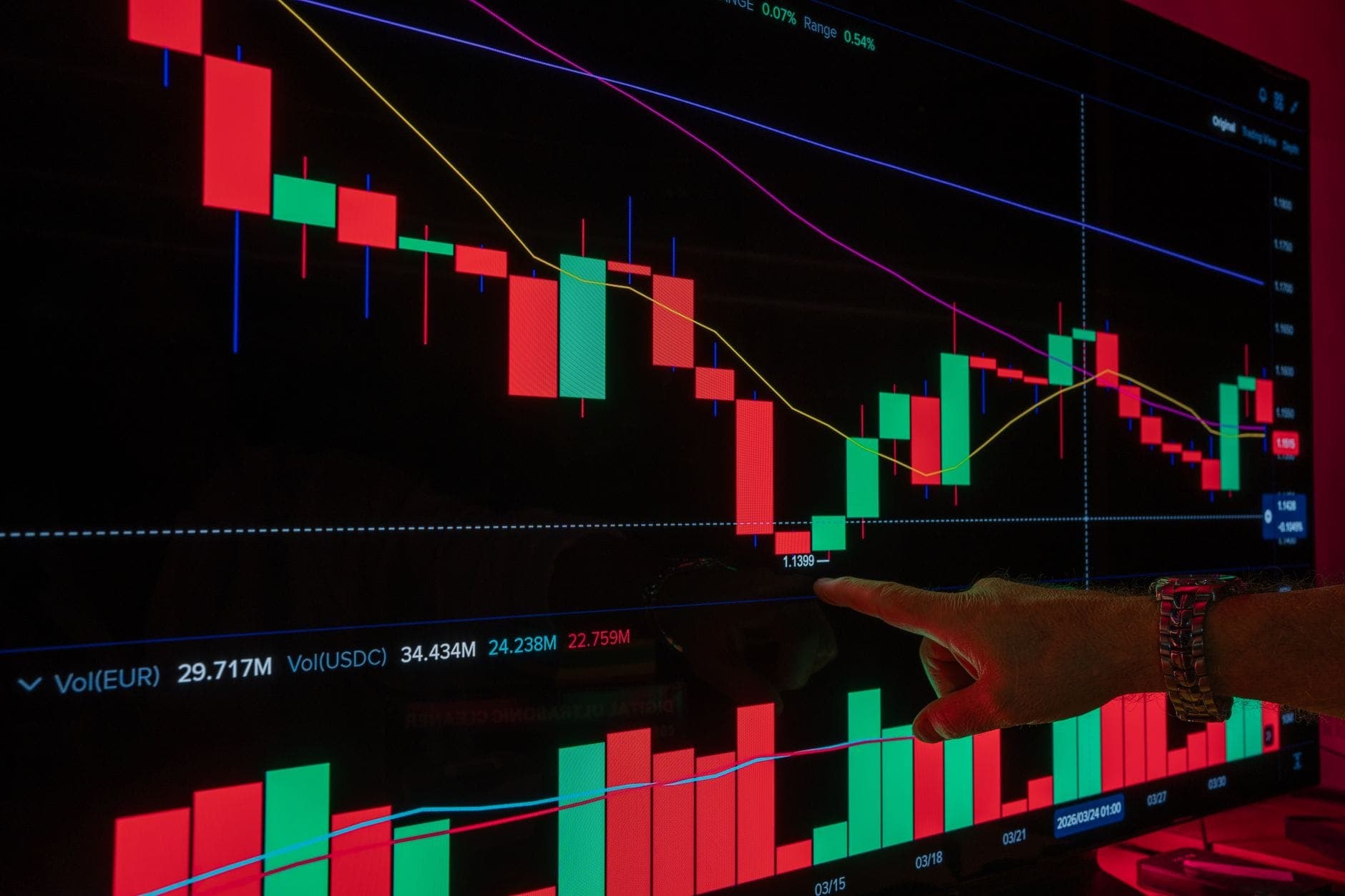
Trading Session Strategy: 4 Key Setups
Trading Sessions Volatility Strategy Market Structure 24-Hour Guide Master Session-Specific Trading: A 24-Hour Market Strategy Forex markets operate 24 hours a day, but that doesn't mean they behave the same way at every hour. The traders who consistently navigate currency markets understand

Master Session-Specific Trading: A 24-Hour Market Strategy
Forex markets operate 24 hours a day, but that doesn't mean they behave the same way at every hour. The traders who consistently navigate currency markets understand a fundamental truth: each trading session has its own personality, shaped by which participants are active, what news they're reacting to, and how much liquidity is available at any given moment. Static strategies applied across all sessions miss this reality entirely—a core principle of effective trading session strategy.
These aren't random fluctuations. They're structural features of how the market is built. Understanding them means you can anticipate when momentum is likely to accelerate, when ranges are more likely to hold, and when liquidity is deep enough for the position sizes you want to trade. This isn't about predicting prices—it's about understanding the conditions you're trading in and adjusting your approach accordingly through thoughtful trading session strategy.
Why Trading Sessions Matter for Your Strategy
The forex market is a global market, but it's not evenly active across all 24 hours. Instead, it's shaped by regional financial centers coming online and offline. When Tokyo opens, Asian traders and their participants wake up. When London opens hours later, a new wave of European traders enters, bringing different risk appetites and position sizes. When New York opens, overlap zones create spikes in volatility, news response, and opportunity—each shift requiring adjustments to your trading session strategy.
These aren't random fluctuations. They're structural features of how the market is built. Understanding them means you can anticipate when momentum is likely to accelerate, when ranges are more likely to hold, and when liquidity is deep enough for the position sizes you want to trade. This isn't about predicting prices—it's about understanding the conditions you're trading in and adjusting your approach accordingly to fit each unique trading session strategy.
Asia Trading Session Strategy: Structure and Characteristics
The Asian session typically opens in Tokyo and includes participation from other regional trading hubs. It is generally characterized as the quietest major session by volume standards. This quieter structure means fewer dramatic spikes, but it also means that when volatility does arrive, it can hit smaller position sizes harder.
For traders working in this window, the focus shifts. Rather than chasing large directional moves, many experienced traders look for consolidation patterns, range-bound setups, and preparation for the larger moves that arrive with the London open—essential components of an effective trading session strategy. Position sizing often reflects the lighter liquidity. The timeframes that work here—4-hour and daily charts—are different from the ones that dominate during busier sessions and form a key part of your trading session strategy.
London Open Trading Session Strategy: The Volatility Spike
The London open is often cited as a turning point in the trading day. As the largest financial center in Europe wakes up, trading volume and volatility typically increase. This session is where many traders see the market come alive, where overnight positions get unwound, and where news responses become more aggressive—a critical phase in any trading session strategy.
Traders who understand this window know that the strategies effective in Asia—waiting patiently in ranges—may not work here. Instead, breakout logic, momentum confirmation, and tighter stops often become more relevant. Position sizing can accommodate larger moves. The pace accelerates. Many technical traders find that 1-hour and 4-hour timeframes sync better with the participant behavior in this window and align with their trading session strategy.
The New York Session and Overlap Zones
New York's opening brings another shift to market dynamics that every trading session strategy must address. As the largest economy and financial market, US trading brings its own momentum. But the real complexity arrives during overlap—when London is still active and New York is ramping up. These hours are often the most liquid and the most volatile in the daily cycle.
During overlaps, the same chart pattern can behave differently than it would in a single-session window. Momentum tends to hold longer. Breakouts accelerate faster. News hits harder. Traders who understand this adjust by increasing position sizing slightly (since liquidity supports it) and watching for multi-hour trending moves rather than quick reversals—a hallmark of a sophisticated trading session strategy.
Practical Application: Aligning Your Playbook to Sessions
Moving from theory to practice, the goal is not to memorize rigid rules, but to recognize that your setup logic, risk management, and timeframe choices should shift with market conditions. Here are the key adjustments professional traders typically consider within their trading session strategy:
First, adjust your timeframe selection. Asia often rewards 4-hour and daily analyses within a solid trading session strategy. London open to mid-morning often works well on 1-hour to 4-hour timeframes. New York overlaps often sustain longer trends, favoring 4-hour and daily views with 1-hour confirmation. This isn't dogma—it's matching the rhythm of that session's participants.
Second, recalibrate position sizing relative to liquidity and your account risk. Quieter sessions may warrant smaller position sizes if you're hitting the same volatility targets within your trading session strategy. Busier sessions can support larger positions because the market can absorb them without slippage. Your risk per trade stays constant; the position size adjusts.
Third, refine your entry and exit logic. Range-bound setups dominate quiet sessions. Breakouts and momentum continuations dominate active sessions. Know which pattern you're looking for before the session opens, and you'll avoid the trap of trying every strategy at once—the key advantage of a focused trading session strategy.
Building Your Session-Specific Playbook
An effective playbook doesn't require a different strategy for every hour. Instead, it groups the 24-hour day into windows and defines three to five key setups for each window, forming the foundation of your trading session strategy. For each setup, you document the preferred timeframe, the conditions that need to align, your entry logic, your risk management rules, and your profit-taking approach.
The benefit isn't just higher win rates—it's clearer decision-making. When you open your terminal during the London open, you already know which setups make sense for that window. You're not trying to apply Asia logic when London participants have shown up. You're aligned with reality.
To build this, start by reviewing your own trading records. Which sessions have treated you well? Which setups have worked in which windows? Session-specific playbooks aren't invented from scratch—they're extracted from what your market actually does and what your own experience has shown works, forming the basis of your personal trading session strategy.
Session-Specific Playbook Examples: From Theory to Practice
Translating the framework into actual playbook entries requires specificity. For the Asia session, a concrete setup might look like this: Monitor EUR/JPY and USD/JPY on the 4-hour timeframe for range-bound consolidation between the previous day's high and low. Enter on a reversal from either boundary with a confirmed lower high (for shorts) or higher low (for longs). Set your stop just beyond the recent swing point—typically 10-15 pips—and target the midpoint of the established range as your first profit-taking level. This setup works because Asian participants tend to honor intraday support and resistance while awaiting larger moves from other sessions.
For the London open, the setup shifts: Focus on EUR/USD and GBP/USD on 1-hour and 4-hour timeframes. As London comes online between 8:00 AM London time (3:00 AM EST), watch for the break of overnight consolidation levels. If the market closes above overnight resistance on the 1-hour chart with volume confirmation, enter a breakout long with your stop below the recent swing low. Target 1.5x your risk on the first target, then trail the remainder to the next 4-hour resistance level. This captures the directional momentum that typically arrives with the European session.
For the New York overlap, your approach expands: During the 12:00-16:00 London time window (7:00 AM-11:00 AM EST), liquidity peaks and trends extend. Enter breakouts on the 4-hour chart with 1-hour confirmation candles. Because liquidity is highest, position sizing can increase slightly. Trail stops using the 4-hour chart's moving averages or swing points, targeting multi-hour trends rather than quick reversals. This aligns your position management with the session's structural advantage.
Key Takeaways for Session-Aware Trading
The 24-hour forex market is not one market—it's several overlapping sessions, each with its own structure and participant behavior. Traders who ignore this dynamic apply static approaches to a dynamic environment and wonder why results vary wildly.
By aligning your setups, timeframes, position sizing, and risk management to the session you're actually trading in, you're making a subtle but powerful shift: you're trading with the market's structure, not against it. This aligns your approach with reality—the basis of any sound trading session strategy. And that's the foundation of consistent trading discipline.
This content is for educational purposes only and does not constitute financial advice; trading forex carries substantial risk of loss.
Learn more about refining your session-specific strategy and understanding market microstructure.
Edge-Forex publishes general market analysis, not investment advice. Market data shown is indicative and may be delayed.
Written by
Vinit Makol
Lead Strategist and Market Analyst at Edge-Forex
Vinit Makol is a forex trader, strategist and market analyst with more than 20 years of experience in forex and financial markets.
Covers